.png)
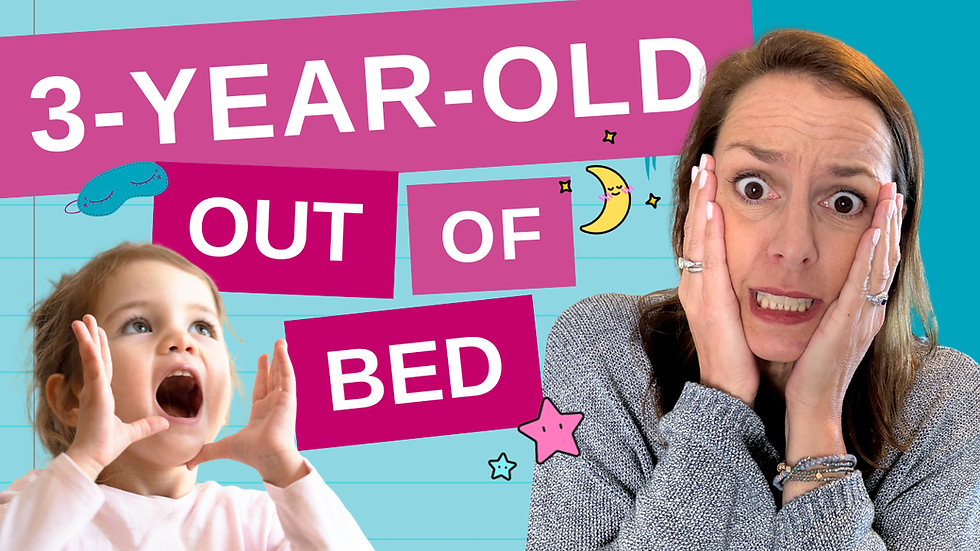
5 Mistakes Parents Make That Keep Your Kid Afraid to Sleep Alone
- Jessica Berk

- Feb 3
- 7 min read
If you’re sneaking out of your kid’s room every night like a ninja, it might seem like it’s working.
But if your child is scared to sleep alone, it’s probably making things worse.
Think about it from their side for a second. They fall asleep next to you—safe, cozy, maybe even half on top of you. Then they wake up later and you’re gone. No warning. No explanation. Just… alone in their room.
That’s confusing. And yeah, it can be scary.
So even though the sneak-out gets you a little peace at night, it often leads to more fear, more night wakeups, and more kids showing up in your bed at 2am.
And if you’ve ever stood in the doorway holding your breath, thinking please don’t wake up, please don’t wake up while you inch toward the hall—same. I see you.
In this blog post, I’m breaking down the five biggest mistakes parents make that keep kids scared to sleep alone.
Here’s what I want you to hear before we go any further: you’re not doing anything wrong. You’re not creating bad habits on purpose. You’re just doing what works in the moment when you’re tired and it’s the end of a long day.
But some of the things that feel helpful at bedtime are actually keeping your child dependent on you to fall asleep. And that’s what leads to longer nights, more wakeups, and everyone feeling worn down and frustrated.
I’m going to walk you through each mistake, explain why it backfires, and show you a better way to handle it—one that helps your child feel safe and gets you your evenings back.
MISTAKE #1: Sneaking Out of the Room
Let’s talk about the sneak-out.
This is by far the most common move parents use when their kid is scared to sleep alone.
You lie there forever waiting for them to finally fall asleep. Then you slowly peel yourself off the bed like a human sloth, praying nothing creaks. Maybe you crawl toward the door. Maybe you freeze halfway there, holding your breath, convinced the sound of your sock brushing the carpet will wake them.
We’ve all been there.
Here’s the problem: when your child falls asleep like this, they’re not actually relaxed. They’re alert. On some level, they’re keeping tabs on you.
They’re not learning, “My room is safe.”They’re learning, “I need to stay half-awake so Mom doesn’t disappear.”
If it feels like bedtime is taking longer and longer lately, this is probably why. Maybe it used to be five minutes. Then ten. Then twenty. Now you’re lying there for 45 minutes wondering how this became your life.
That’s not stubbornness. That’s hyper-vigilance.
And it creates a bigger issue: your child starts to believe you are the safety cue. Not their bed. Not their room. Not themselves.
So when they wake up in the middle of the night—and they will—they panic if you’re gone. Their brain goes straight to: Something’s wrong. I can’t do this alone.
What to do instead
This is why learning to fall asleep independently matters so much.
Your child needs a predictable goodbye, not a disappearing act. A cozy routine. One final tuck-in. A clear, calm exit. And then you leave—on purpose, the same way, every night.
When you stop sneaking out, the fear starts to fade. Your child isn’t lying there waiting for you to vanish anymore. They know what to expect.
And once they’re not busy monitoring your exit, they can finally do the thing we want them to do in the first place—fall asleep.
MISTAKE #2: Laying Down “Just Until They Fall Asleep”
Let’s be honest—this one feels sweet. Cozy, even.
Until it turns into a two-hour snuggle situation, your arm goes numb, your kid is drooling on you, and you’re silently Googling, “When will my child sleep on their own?”
Here’s why this backfires.
When you lie down with your child until they fall asleep, you accidentally become a sleep crutch. Something they need in order to drift off—just like a pillow or a favorite blanket.
Think about it this way: imagine falling asleep in your own bed, all cozy under the covers. Then you wake up in the middle of the night and the covers are gone. You wouldn’t just roll over and peacefully fall back asleep. You’d wake up. You’d notice. You’d need to fix it.
That’s exactly what’s happening for your child.
If you’re part of how they fall asleep, they’ll look for you every time they come up into a light sleep overnight. Even if you sneak away successfully at bedtime, they wake up later and think, “Wait. Something’s missing.”
And that something is you.
What to do instead
The goal is to put them to bed—not put them to sleep.
You can still support them. Sit next to the bed. Rub their back for a minute. Offer comfort and presence. Just don’t become the thing they’re sleeping on.
Let them fall asleep under the same conditions they’ll have all night long.
This one change alone can make a huge difference. And for a lot of families, it’s the beginning of the end of those middle-of-the-night wakeups.
MISTAKE #3: Too Much Reassurance at the Wrong Time
This one is hard.
Because it feels like love. And honestly? It is love.
Your child says, “I’m scared,” and your instinct is to drop everything. You go back in. You lay down. You stroke their hair. You whisper, “You’re safe” over and over until you’re calm again.
But here’s the part no one tells you.
When reassurance only shows up after fear shows up, it can actually make the fear bigger.
From your child’s point of view, it looks like this:If Mom has to come back and lay with me, then yeah… this must be scary.
So instead of building confidence, you accidentally teach them that they need you in order to feel okay.
And then they keep calling you back. Night after night.
What to do instead
Fear itself isn’t the problem. Childhood fears are normal. Expected, even.They’re also an opportunity—for your child to learn that they can handle hard feelings.
Here’s the shift: Reassure before the fear shows up. Not during it.
Talk about worries in the daytime. When everyone is calm. Give them a plan they can use on their own—a phrase, a picture in their head, a stuffed animal with a “job.”
And then, at bedtime, you lead with confidence. Calm. Steady. Boring.
Your confidence is contagious.
And when you step back just enough, your child gets the chance to step up and realize: Oh. I can do this.
That’s how real confidence grows.
MISTAKE #4: Letting Fear Set the Rules
You’ve probably been here.
You leave the hallway light on. Then the door cracked. Then you add one more story. Then another. And eventually… they’re in your bed. All because they seemed scared and you didn’t want to make it worse.
Totally understandable.
But here’s the problem: when fear runs the bedtime routine, kids don’t actually feel safer. They feel less safe.
Kids want to know someone is in charge. They want to feel that you’ve got this. And when bedtime starts shifting based on their fear—more lights, more stories, more exceptions—it sends a different message: Even Mom isn’t sure this is okay.
So they push. They test. They ask for more. Not because they’re being difficult—but because they’re hoping you’ll show them where the line is.
Sometimes kids need to borrow our confidence. And we know they’re safe in their room. So we have to act like it.
When fear gets to make the rules, it doesn’t shrink. It grows.
What to do instead
Set the rules from a place of calm confidence—not fear.
Yes, maybe they get a nightlight. That’s reasonable. But no, they don’t move into your bed—because they are safe right where they are.
Whatever your rules are, set them ahead of time. Say them clearly. Stick to them kindly.
You can validate the feeling and hold the boundary:
“It’s okay to feel nervous.”
“You’re safe.”
“You can do this.”
“I’ll see you in the morning.”
That combination—empathy plus confidence—is what actually creates emotional security.
MISTAKE #5: Inconsistency
This one sneaks up on a lot of parents.
Maybe one night you sit with them until they fall asleep. The next night, you sneak out.Then you decide to let them cry for a bit. Then the next night they end up in your bed because you’re completely wiped and just need sleep.
None of that makes you a bad parent. It makes you a tired one.
But all those changes? They’re not just confusing—they’re stressful for your child.
When a kid never knows what to expect, their brain stays on high alert. They can’t relax. They keep testing. Not to be difficult—but to figure out which version of bedtime they’re getting tonight.
And that uncertainty? That fuels anxiety.
What to do instead
Pick a plan—and stick with it.
Not for one night. Not for three. Give it real time. A few weeks, at least.
Consistency is what turns bedtime from chaos into something predictable and calm. Even if the first couple nights are bumpy, staying steady teaches your child, “I know what’s going to happen here. I can trust this.”
That’s when things start to shift. Not overnight magic—but real, lasting change.
Welcome to the club
And guess what? If you’ve made all five, welcome to the club. It’s not the end of the world. In fact, it makes you like most moms —you just need a better plan.
And that’s exactly what I teach inside my Toddler Sleep Masterclass. It’s totally free, and it walks you through my proven REST Method®—so your child can fall asleep independently and stay in their own bed all night.
➡️Go sign up at AwesomeLittleSleepers.com/workshop, and start getting the evenings—and sleep—you deserve.


One thing I appreciate about Drive Mad is the level variety. New mechanics appear often enough to keep the gameplay feeling fresh.
While searching for information online, I came across this content website and unexpectedly spent much more time here than planned. The article introduced several useful points that were explained in a very reader-friendly way. I especially liked how the author focused on meaningful observations instead of generic statements. The pacing of the discussion also worked very well from beginning to end. Discovering websites with thoughtful articles like this is always a pleasant surprise. Great post.
What made this informative blog stand out to me was how naturally the article flowed between different ideas. Reading the post never felt tiring or repetitive, which is surprisingly rare these days. The explanations were detailed enough to be valuable while still remaining easy to follow. I also appreciated the calm writing style used throughout the discussion. Articles like this make learning about new topics much more enjoyable. Looking forward to exploring more content here.
Very engaging article with a lot of useful ideas and observations included throughout the text. The informative blog stands out because it focuses on clear communication and high readability. I appreciated how the article remained focused on the topic while still offering enough detail to keep readers interested. The examples and explanations worked really well together. It is always refreshing to discover content that feels educational and approachable at the same time. Thanks for creating such quality material.
This was a very interesting and well-prepared article. I especially appreciated how more info was naturally included throughout the text without making it feel overloaded. The explanations were simple, clear, and easy to follow from beginning to end. It is always refreshing to read content that feels informative and engaging at the same time. The structure of the article also made the reading experience very comfortable. Looking forward to discovering more posts like this.